 Baimaoxing
Baimaoxing
Baimaoxing
Houston stands as the undisputed energy capital of the world, a designation that dictates its specific and rigorous demands for industrial materials, particularly copper and copper alloys. As a global hub for petrochemical, aerospace, and energy sectors, the requirement for high-grade, corrosion-resistant copper solutions—ranging from heat-exchanger tubing to high-conductivity busbars—is unprecedented.
For procurement officers and industrial engineers operating in Houston, the challenge is not just finding a manufacturer, but securing a supply chain that meets the ASTM and ASME standards required by the local regulatory landscape. Our commitment to quality ensures that every shipment adheres to the highest metallurgical benchmarks, providing the reliability required for critical infrastructure.
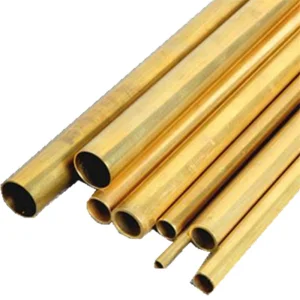
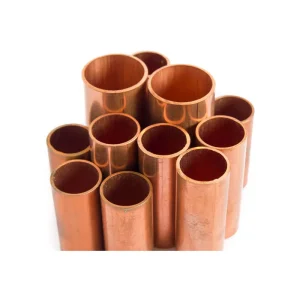
Houston’s industrial ecosystem relies heavily on materials that can withstand harsh environments. The high humidity and the presence of corrosive agents in petrochemical facilities require advanced copper-nickel alloys and C12200 phosphorus-deoxidized copper tubing. These materials are essential for maintenance, repair, and operations (MRO) in the refineries along the Ship Channel.
The global copper market is undergoing a structural shift. With the transition toward green energy—specifically the electrification of the grid and the rise of electric vehicles (EVs)—copper has been redefined as a "green metal." Future manufacturing roadmaps are no longer focused solely on volume; they are focusing on purity grades (99.9%+), energy efficiency in production, and circular economy practices. Our factories are integrating digital twin technology and automated quality control to ensure that the copper we supply meets the ultra-high conductivity requirements of modern EV battery architectures and renewable energy components.
Understanding the difference between T1, T2, and oxygen-free copper (OFC) is critical for our clients. In high-precision instruments and aerospace applications, oxygen-free copper (TU1/TU2) is mandatory to prevent hydrogen embrittlement. Our facilities in China, leveraged to serve our global partners, utilize cold-drawing and precise annealing processes that guarantee tensile strength and elongation metrics compliant with the strictest international standards.
In the complex market of industrial manufacturing, the gap between a "standard" product and a "high-performance" component is significant. We bridge this gap through rigorous E-E-A-T (Experience, Expertise, Authoritativeness, and Trustworthiness) standards:
A: For petrochemical applications, we highly recommend C70600 (90/10 Copper-Nickel) for its superior corrosion resistance against saltwater and chemical exposure, and C12200 for general-purpose heat exchange tubing.
A: We utilize advanced vacuum packaging and moisture-inhibitor treatments to prevent oxidation and staining during maritime transit, ensuring that your copper arrives in "factory-fresh" condition.
A: Absolutely. Our state-of-the-art machinery allows for precision cutting, shearing, and fabrication to meet your specific blueprint requirements, reducing your on-site processing time.