
Baimaoxing
The global demand for copper rods has surged, driven by expanding industries such as electrical wiring and construction. According to a recent report by Mordor Intelligence, the copper rod market is expected to experience significant growth, transitioning from a value of USD 16 billion in 2021 to over USD 20 billion by 2026. This growth highlights the importance of understanding key suppliers in China, which is the largest producer and consumer of copper rods.
Expert insights also suggest a shifting landscape. Dr. Li Wei, a renowned authority in materials science, states, “The evolution of copper rod manufacturing is crucial for meeting future industrial needs.” His observation underscores the critical role that suppliers play in this dynamic sector. Various factors, including raw material prices and technological advancements, contribute to the complexities of the copper rod market.
Navigating this industry requires expertise. It involves understanding not just market fluctuations but also the specific capabilities and offerings of top suppliers. While many companies claim to provide high-quality copper rods, the challenge lies in assessing their reliability and performance. Professionals must critically evaluate supplier partnerships to ensure they can meet evolving demands effectively.
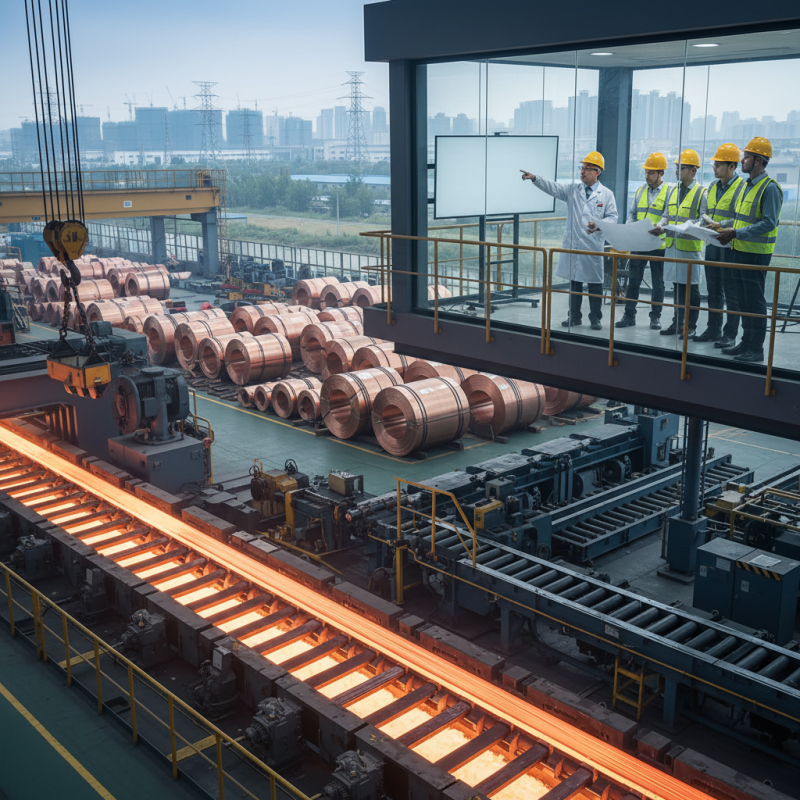
China has emerged as a major player in the copper rod production industry. In 2022, the country produced about 6 million tons of copper rods. This figure accounted for over 35% of global production. The growth trajectory is linked to the booming electronics and renewable energy sectors. Demand for copper rods is expected to rise further as the world transitions to greener technologies.
Regions like Jiangsu and Guangdong lead in copper rod manufacturing. These areas benefit from advanced infrastructure and skilled labor. However, challenges persist. Environmental regulations are tightening. Manufacturers must adapt their processes. Reports indicate that older production methods are less sustainable. This calls for innovation in the industry.
Moreover, fluctuations in raw material prices create instability. The price of copper has seen significant volatility in recent years. In 2023, copper prices fluctuated between $8,000 and $10,000 per metric ton. Firms need to optimize operations to cope with these changes. The pressure to stay competitive is high. Quality control is essential but often overlooked in the rush to fulfill orders. This highlights the need for continuous improvement in production techniques.
In the Chinese copper rod supply chain, several key players dominate the market. According to industry reports, China produced over 9 million tons of copper in 2022, making it the largest producer globally. This high production volume highlights the significance of local suppliers in the global copper market.
Leading companies in this sector focus on economies of scale. Many invest in technology to enhance production efficiency. For instance, some utilize advanced smelting processes to reduce energy consumption. Lower operational costs can lead to competitive pricing, which is crucial in a fluctuating market. These organizations also emphasize sustainable practices, addressing the increasing demand for environmentally-friendly production methods.
Despite these advancements, challenges remain. Supply disruptions and fluctuating raw material costs can impact production. Moreover, while some companies excel, others struggle to adapt. This discrepancy highlights the need for continuous innovation and strategic partnerships in the supply chain. As the demand for copper rises, addressing these issues will be essential for long-term success in the industry.
| Supplier Type | Annual Production Capacity (tons) | Location | Market Share (%) | Established Year |
|---|---|---|---|---|
| Integrated Manufacturer | 500,000 | Beijing | 25 | 1995 |
| Trading Company | 300,000 | Shanghai | 15 | 2000 |
| Refinery | 700,000 | Guangzhou | 30 | 1980 |
| Specialty Copper Supplier | 200,000 | Shenzhen | 10 | 2010 |
| Recyclers | 150,000 | Wuhan | 5 | 2015 |
In the copper rod market, suppliers vary widely in quality, production capacity, and specialization. A recent industry report highlights that China accounts for over 50% of the global copper production. This dominance has led to numerous suppliers emerging with different strengths and weaknesses. For instance, one may excel in high-volume production, while another focuses on innovation in copper alloy technology.
A comparative analysis reveals that the leading suppliers often adhere to strict industry standards. They utilize advanced manufacturing techniques to ensure durability and conductivity. According to a study by the International Copper Association, the overall demand for copper rods in the renewable energy sector is projected to increase by 20% over the next five years. This trend necessitates a closer look at how suppliers respond to quality demands.
Yet, discrepancies in product specifications can pose challenges. Some suppliers might overlook essential certifications, affecting reliability. A significant portion of the market still relies on outdated production methods, which can lead to inconsistent quality. This indicates a need for ongoing assessment of suppliers to ensure that they meet evolving industry standards.
The copper rod manufacturing market in China is experiencing notable shifts. Increasing demand for electric vehicles drives production growth. Renewable energy projects also require extensive copper supplies. These factors significantly influence how manufacturers operate.
Understanding market trends is essential for suppliers. The shift towards sustainable materials pushes companies to innovate. Embracing green technologies can lead to better market positioning. Copper rod suppliers must adapt to these evolving demands.
Tips: Monitor regulatory changes closely. Staying informed aids strategic planning. Engage with industry experts for insights. Building a strong network enhances reliability. Anticipating market shifts is crucial for success.
The copper rod industry in China is on the brink of significant shifts. As demand for electric vehicles and renewable energy sources grows, copper rods become essential. They are crucial for manufacturing wiring, motors, and other components. This increasing demand is pushing suppliers to innovate and enhance production processes.
Challenges persist in the industry. Fluctuating copper prices and environmental regulations pose risks. Suppliers need to address sustainability while maintaining competitiveness. Many are investing in green technologies and recycling practices. This adaptation demonstrates a commitment to both profit and environmental responsibility.
Looking ahead, the industry may experience consolidation. Smaller suppliers might struggle to keep up with larger firms investing in advanced technology. The landscape could change, impacting pricing and availability. Continuous improvement and adaptability are essential for long-term success in the copper rod market.
: China is the largest copper producer, with over 9 million tons produced in 2022.
Many companies invest in technology, using advanced smelting to cut energy costs.
Increased demand for environmentally-friendly methods pushes companies to adopt sustainable practices.
Supply disruptions and fluctuating raw material costs can significantly impact production.
The rise in electric vehicle production increases the overall demand for copper rods.
Suppliers should monitor market trends and embrace innovation to improve their positioning.
Engaging with industry experts and building strong networks enhances reliability and readiness.
No, while some excel, others struggle with adaptation, highlighting the need for continuous improvement.
Addressing operational challenges and maintaining strategic partnerships is critical for future growth.
Anticipating market shifts and regulatory changes is essential for strategic planning and resilience.
The copper rod industry in China has grown significantly, driven by increasing demand in various sectors such as electrical and construction industries. This overview delves into the production dynamics, highlighting key players within China's copper rod supply chain and providing a comparative analysis of the top suppliers. Market trends, including a shift towards sustainable practices and technological advancements, are influencing copper rod manufacturing, paving the way for innovative production methods and improved quality.
Looking ahead, the future outlook for the copper rod industry in China appears promising, with continuous investment and development expected to bolster production capabilities and market responsiveness. As the demand for copper rods rises, companies are likely to adapt quickly to emerging trends, ensuring their competitive edge in the global market.
