Baimaoxing Baimaoxing

2026 Top Brass Rod Manufacturers and Suppliers?

Time:2026-09-19 Author:Charlotte
0%

Choosing the right Brass Rod manufacturer in 2026 requires more than comparing prices on a supplier list. Material quality, production consistency, documentation, and delivery performance can affect every stage of a project. A bright, accurately sized rod may machine smoothly, while inconsistent chemistry can create tool wear, weak joints, or costly rework. Small differences matter.

This guide examines leading Brass Rod manufacturers and suppliers through practical purchasing criteria. These include alloy options, dimensional tolerances, surface finish, manufacturing capacity, testing procedures, and export experience. It also considers certifications, traceability, packaging standards, and customer support. Reliable suppliers should provide clear mill test reports and explain how each batch is inspected. Claims alone are not enough.

Real-world use matters. A plumbing component, electrical connector, decorative fitting, and precision-machined part may require different brass grades and hardness levels. Buyers should confirm the intended application before accepting a standard quotation. That step is often missed. It should not be.

The 2026 selection also reflects changing expectations around lead-time control, transparent communication, responsible sourcing, and quality assurance. However, no ranking can replace direct verification. Product samples, factory audits, and independent testing may still be necessary for critical orders. This article offers a structured starting point, not a final guarantee. Supplier capabilities can change, and published information may become outdated. Careful buyers should review current records, request recent samples, and match technical evidence with actual production needs.
2026 Top Brass Rod Manufacturers and Suppliers?

What Are Brass Rods and Where Are They Used?

Brass rods are cylindrical semi-finished products made mainly from copper and zinc. Small additions of lead, tin, or aluminum can improve machinability, strength, or corrosion resistance. Their golden surface is familiar, but appearance alone proves little. Chemical composition matters.

The International Copper Study Group reported global copper mine production near 22 million metric tons in 2024. This upstream figure shows the scale supporting copper-alloy manufacturing, not brass-rod output itself. That distinction is often missed. USGS Mineral Commodity Summaries 2025 also identifies copper as a major industrial metal used in construction, electrical equipment, transportation, and machinery.

Brass rods are commonly machined into valves, plumbing fittings, gears, fasteners, electrical terminals, and decorative hardware. Plumbing workshops prefer corrosion-resistant grades for threaded parts. Automated factories often select free-cutting grades because they produce short chips and reduce tool wear. ASTM B16/B16M provides requirements for certain free-cutting brass rods, bars, and shapes.

Real selection requires more than a supplier’s catalog. Buyers should check alloy designation, diameter tolerance, temper, surface condition, and test certificates. A rod may look flawless and still fail machining trials. That is the uncomfortable part. End-use temperature, water chemistry, and joining method can change the correct grade. Reliable suppliers provide traceability, dimensional inspection records, and consistent batch data.

How to Evaluate Brass Rod Manufacturers and Suppliers

2026 Top Brass Rod Manufacturers and Suppliers

How to Evaluate Brass Rod Manufacturers and Suppliers

Choosing a brass rod supplier in 2026 requires more than comparing quoted prices. I have found that alloy control, dimensional accuracy, and traceable testing reveal more than polished catalogs. Ask for the exact alloy designation, temper, diameter tolerance, and surface condition. A reliable manufacturer should provide mill certificates linked to each production lot. Check that each certificate identifies chemical composition, mechanical results, and batch numbers. Small details matter.

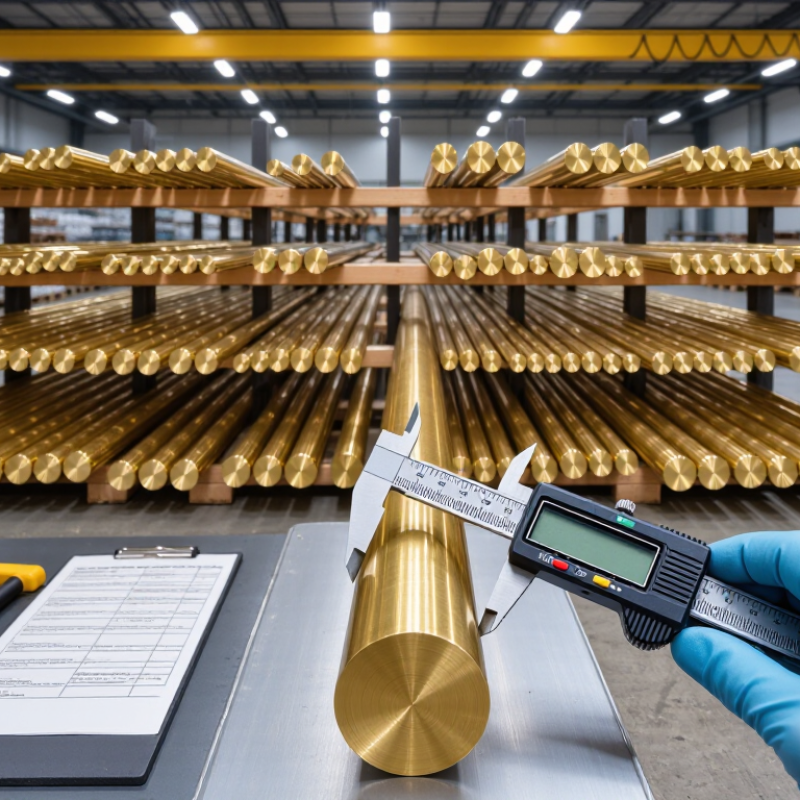
Request samples cut from normal production, not specially prepared pieces. Measure diameter at several points with calibrated tools, and inspect scratches, pits, and oxidation. For machining projects, discuss hardness and straightness before placing a large order. For electrical or plumbing uses, confirm relevant regional standards and testing records. I also examine packaging; loose rods can arrive bent despite excellent factory data. That mistake is easy to miss.

Supplier evaluation should include production capacity, lead-time history, minimum order quantities, and response quality. Ask how nonconforming material is isolated and how corrective actions are documented. An on-site or remote audit can verify equipment, calibration, storage, and worker training. Do not accept vague promises. A capable supplier explains limitations honestly, including alloy substitutions or delayed testing. My own reviews are not perfect; I once focused too heavily on price and overlooked inconsistent packaging. That experience changed my checklist. Before approval, compare at least two sample lots and record every result.

Top Brass Rod Manufacturers and Suppliers in 2026

Top Brass Rod Manufacturers and Suppliers in 2026

The best brass rod manufacturers in 2026 will compete on consistency, not only price. Buyers should examine alloy grades, diameter tolerance, surface finish, and delivery records. According to the USGS Mineral Commodity Summaries 2025, global copper mine production reached about 22 million metric tons in 2024. That scale supports broad brass supply, but it does not guarantee stable rod quality. Manufacturing experience still matters.

Reliable suppliers should provide mill certificates, chemical analysis, tensile results, and traceability documents. ASTM B16 and EN 12164 remain useful references for brass rod specifications. However, standards alone may not reveal poor straightness or uneven polishing. A practical sample inspection can expose those weaknesses. The International Copper Study Group also continues to report pressure from energy transition demand, which may affect copper-based alloy costs and lead times. Forecasts can be wrong. That deserves attention.

Tips: Request three recent production samples. Measure diameter at several points. Confirm the alloy before placing a large order. Ask how recycled material is controlled. A low quotation may reflect thinner documentation, not better efficiency. I would also compare packaging quality, because scratched rods create avoidable waste during machining. Supplier rankings are helpful, but they should support testing, not replace it.

Which Brass Rod Standards and Grades Should Buyers Compare?

In 2026, buyers should compare the standard before comparing the quoted price. ASTM B16 commonly covers free-cutting brass rod for machining applications. EN 12164 addresses copper and copper alloy rod for machining. These standards are not interchangeable. They may define different chemical limits, dimensions, and testing rules. Check the product form, not only the alloy name. A round rod and a forged bar can require different specifications. Small detail, big consequence.

Grade selection should match the finished part. UNS C36000 offers excellent machinability, but its lead content may restrict some applications. C46400 suits marine hardware where stronger dezincification resistance matters. C26000 is more ductile for forming, though it may machine less easily.

CW614N and CW617N are common European references for machining and hot forming. Compare tensile strength, hardness, elongation, temper, and conductivity. Do not accept “brass rod” as a complete description. It is not.

Reliable purchasing requires traceable evidence. Request the applicable standard edition, heat number, chemical analysis, mechanical test results, and dimensional inspection record. Confirm whether tolerances follow the cited standard or a separate drawing. Ask how surface defects are controlled after peeling, drawing, or straightening. A certificate alone is not proof; sampling and independent verification can expose mismatched material. I would also check packaging, moisture protection, and lot separation during a trial order. One weakness remains: suppliers may quote equivalent grades without explaining the differences. Buyers should record every assumption before approval, because a minor substitution can change tool wear, forming behavior, or service life.

How to Select the Right Brass Rod Supplier for Your Needs

Choosing a brass rod supplier in 2026 starts with your application, not a catalog. A machinist may need free-cutting brass, while a fabricator may prioritize corrosion resistance and forming behavior. Ask for the exact alloy, temper, diameter, length, and tolerance. Small differences matter. A rod that looks straight can show ovality under a micrometer. This may create uneven turning and avoidable scrap. Specify the surface finish, especially for visible fittings or precision parts.

Reliable suppliers provide a current material certificate, lot identification, and test information. Check whether chemical composition, hardness, tensile results, and dimensional checks are documented. Traceability should continue from raw billet to packed bundle. Request a sample before approving a large order. Measure it yourself. Test it in the actual process. A sample can machine well yet perform poorly during bending. That detail is easy to miss.

Evaluate production capacity and delivery discipline together. Confirm minimum order quantities, repeat-order consistency, packaging, and protection against scratches or moisture. Ask how nonconforming material is handled and how quickly technical questions receive answers. Price alone misleads. Compare total usable cost, including setup fees and production delays. I would request references from similar applications, although references are not proof. Your drawings, inspection plan, and acceptance criteria should be written clearly. Even experienced buyers sometimes leave those points vague.

FAQS

What are brass rods made from?

Brass rods mainly contain copper and zinc. Small additions may improve machinability, strength, or corrosion resistance. Appearance is not enough.

Where are brass rods commonly used?

They are machined into valves, fittings, gears, fasteners, terminals, and decorative hardware. Their uses span plumbing, machinery, electrical equipment, and construction.

Why do manufacturers choose free-cutting brass grades?

These grades produce shorter chips during machining. They can reduce tool wear and improve production efficiency. Performance still depends on hardness and machine settings.

What information should buyers request before ordering?

Ask for the alloy designation, temper, diameter tolerance, surface condition, and test certificates. These details reveal more than a polished catalog.

How should brass rod samples be inspected?

Measure diameter at several points using calibrated tools. Check for scratches, pits, oxidation, bending, and inconsistent surfaces. Sample normal production lots.

Why are certificates and batch numbers important?

They connect chemical results and mechanical data to a specific production lot. Traceability helps identify problems when material fails later.

What supplier capabilities should be evaluated?

Review capacity, lead-time history, minimum order quantities, calibration practices, storage, and worker training. Ask how defective material is isolated.

Can a brass rod look perfect but perform poorly?

Yes. A rod may fail machining trials despite a smooth golden surface. I once focused too heavily on price and missed poor packaging.

How can packaging affect brass rod quality?

Loose rods may arrive bent, scratched, or oxidized. Strong packaging should support straightness during handling and transportation. This detail is easy to miss.

Should buyers compare multiple sample lots?

Yes. Compare at least two normal production lots and record every measurement. Small differences may expose inconsistent process control. Aamma.

Conclusion

This guide explores what a Brass Rod is, how it is manufactured, and where it is commonly used in industries such as engineering, plumbing, electrical equipment, automotive components, and general fabrication. It explains the key factors buyers should consider when evaluating manufacturers and suppliers, including material consistency, dimensional accuracy, surface quality, production capacity, testing procedures, customization options, delivery reliability, and technical support.

The article also compares important brass rod standards and grades, helping buyers understand how chemical composition, mechanical properties, machinability, corrosion resistance, and application requirements affect product selection. It presents practical methods for choosing the right supplier in 2026, with emphasis on quality control, certification, transparent communication, competitive pricing, and dependable service. By reviewing these points, buyers can make informed decisions and select brass rods that provide suitable performance, durability, and value for their specific projects.

Charlotte

Charlotte

Charlotte is a seasoned marketing professional with a deep understanding of the company's portfolio and a passion for elevating its presence in the market. With a keen eye for detail and a commitment to excellence, she ensures that our professional blog is regularly updated with insightful articles......