
Baimaoxing
Choosing the best Brass Plate manufacturer in 2026 requires more than comparing catalog prices. Global buyers need verified production capability, consistent alloy control, and dependable export experience. A polished website is not enough. The real evidence appears in test reports, sample quality, factory communication, and delivery performance.
This guide examines manufacturers through practical purchasing criteria. These include C26000 and C11000 availability, thickness tolerance, temper options, surface finish, cutting accuracy, and packaging strength. Buyers should request mill certificates, inspection records, and representative samples before approving large orders. A 2-millimeter plate may look acceptable initially, yet uneven edges can disrupt stamping, machining, or assembly. Small details matter.
Reliable suppliers also explain their limitations. That matters. They should clarify minimum order quantities, production lead times, tooling charges, and material traceability. Independent audits and transparent quality procedures can strengthen confidence, especially for buyers importing across multiple regions. However, no ranking remains perfect for every application. A manufacturer suited to decorative hardware may not meet the demands of electrical components or heavy industrial parts. This guide therefore compares capabilities instead of making unsupported promises. It also recognizes an uncomfortable truth: low pricing can hide inspection gaps, unstable supply, or costly rework. Careful buyers will weigh total landed cost, communication speed, and after-sales support. The strongest manufacturers combine technical knowledge with repeatable production and honest documentation. That is the standard global buyers should expect in 2026.
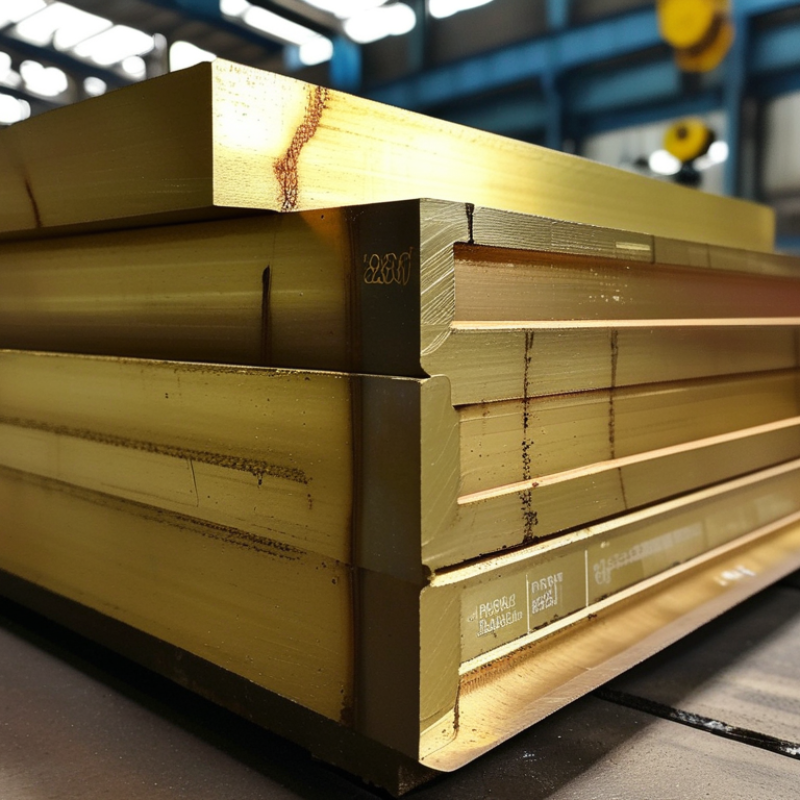
A brass plate is a flat sheet made mainly from copper and zinc. Its appearance may look simple, but its performance depends on alloy chemistry, thickness, temper, and surface condition. According to the USGS Mineral Commodity Summaries 2025, global copper mine production reached about 22 million metric tons in 2024. Zinc production also exceeded 12 million metric tons. These figures show the scale of the raw-material market, not consistent plate quality.
Manufacturer selection matters because brass plates often face bending, machining, heat, moisture, and repeated handling. A reliable supplier should provide the alloy designation, chemical analysis, thickness tolerance, flatness data, and mechanical test results. Ask for batch traceability. It makes claims easier to verify. ASTM and EN references can help buyers compare materials across countries.
A polished sample can mislead.
In practical purchasing, I would inspect the plate edge, not only its bright surface. Uneven edges may reveal poor slitting or internal stress. Request independent test reports when the application is demanding. The International Copper Study Group’s 2024 market outlook highlights continuing pressure on copper supply and demand, which may affect lead times and pricing. Still, a lower quote is not automatically efficient. Sometimes, it hides weaker inspection or inconsistent alloy control. I have seen buyers focus heavily on appearance and overlook flatness. That mistake becomes expensive during fabrication. A careful manufacturer explains limitations clearly and accepts reasonable questions. Reliability is demonstrated through records, repeatability, and honest technical communication.
In 2026, brass plate buyers should evaluate manufacturers beyond price and polished catalogs. Start with production experience in your required alloy, thickness, temper, and surface finish. Ask for recent project records, not generic claims. A dependable supplier can explain how casting, rolling, annealing, and leveling affect final performance. Details matter.
Request complete material documentation for each shipment. This should include chemical composition, mechanical properties, dimensions, heat numbers, and inspection results. Compare the report with recognized standards and your own drawing requirements. Independent testing can verify hardness, tensile strength, conductivity, and surface condition. Small samples should reveal scratches, edge cracks, waviness, or uneven color. Inspect both sides under consistent lighting.
Factory capability also includes process control and delivery discipline. Review calibration records, quality procedures, packaging methods, and corrective-action reports. Ask how the manufacturer handles a failed inspection or a late batch. The answer may be more valuable than a sales presentation. Confirm minimum order quantities, production capacity, lead times, and export documentation in writing. A site audit, video inspection, or pre-shipment check adds useful evidence. Still, no evaluation is perfect. Test results can vary between lots, and attractive documentation may hide weak follow-up. Keep approval samples, record measurements, and reassess performance after delivery. Reliability is built through repeatable evidence, not confident promises.
For global buyers in 2026, brass plate manufacturers must offer more than attractive pricing. Experienced suppliers explain alloy grades, thickness tolerances, surface options, and production limits before quoting. This early honesty reduces costly revisions. Ask for mill test certificates, dimensional inspection records, and samples from current production. Small details matter. A clean edge and consistent color often reveal process discipline.
Reliable manufacturers serving international markets usually control melting, rolling, annealing, cutting, and packing procedures. Buyers should confirm whether copper and zinc composition is tested internally or by an independent laboratory. Traceability is equally important. Each bundle should carry heat numbers, sizes, quantity, and inspection status. For architectural, electrical, marine, or decorative applications, the plate must match the service environment. A polished surface may look excellent, yet fail after unsuitable forming or exposure.
Export capability needs practical proof, not impressive promises. Review packaging photos, loading methods, lead-time history, and document accuracy. Clarify Incoterms, pallet construction, moisture protection, and claim handling before payment. In sourcing reviews, projects are often delayed by unclear tolerances, not poor metal. No supplier is perfect. A thoughtful manufacturer admits risks and proposes workable controls. Buyers should compare test results, communication speed, and sample consistency instead of choosing the lowest quote.
The chart compares nominal copper content in widely used UNS brass grades. Higher copper content generally improves ductility and formability, while zinc and alloying additions influence strength, machinability, and corrosion performance. Values are composition references based on commonly specified UNS alloy designations; buyers should confirm the applicable ASTM or EN material certificate before ordering.
Brass plate suppliers differ sharply in quality, price, and delivery reliability. Experienced buyers should inspect alloy composition, thickness tolerance, surface finish, and flatness before comparing quotations. A bright surface can hide internal defects. Ask for mill certificates, inspection records, and recent production samples. Small details matter.
Price often reflects more than the metal itself. Lower quotations may exclude testing, edge trimming, protective film, or export packaging. Compare the full landed cost, not only the unit price. In practical purchasing, a slightly higher price can reduce machining waste and replacement claims. Still, higher prices do not always prove better quality. That assumption deserves caution.
Delivery performance depends on stock status, production capacity, inspection timing, and transport planning. Request a realistic lead time with clear milestones. Suppliers should explain how they handle thickness changes, urgent orders, and rejected pieces. My own early comparisons focused too heavily on price, which caused avoidable scheduling pressure. A reliable supplier shares updates before problems become expensive. Buyers can also request a small trial order, measure the received plates, and compare results against the agreed specification. Keep records.
The comparison below uses anonymous supplier profiles rather than company or brand names. Figures are indicative 2026 market benchmarks for commercially rolled brass plate and should be verified against a supplier’s quotation, mill test certificate, inspection plan, and current freight terms.
| Comparison Dimension |
Profile A Stock-Based Export Supplier |
Profile B Regional Rolling Mill |
Profile C High-Volume Export Mill |
Profile D Precision Custom Mill |
|---|---|---|---|---|
| Typical product focus | Standard brass plate and sheet held in warehouse inventory. | Regular production batches for construction, electrical, and general engineering use. | Large-volume international orders with repeatable production programs. | Tight-tolerance, application-specific plate requiring detailed technical review. |
| Common copper-zinc alloy range | C26000, C26800, C27200, C28000 and comparable EN grades. | C26000, C26800, C27200, C28000 and comparable EN grades. | Broad range including common cartridge, yellow, and naval-brass grades subject to mill capability. | Specified alloy selected according to mechanical, corrosion, forming, or conductivity requirements. |
| Typical thickness availability | Approximately 0.5–6 mm from stock; thicker sizes may require sourcing. | Approximately 1–40 mm, depending on rolling equipment and alloy. | Approximately 1–80 mm for standard production programs; availability varies by grade. | Approximately 0.3–60 mm, with feasibility confirmed through a technical review. |
| Typical width and length | Widths around 300–1,000 mm; cut lengths commonly available. | Widths around 600–1,500 mm; standard and cut-to-length formats. | Widths around 600–2,000 mm; custom lengths may be available for container-volume orders. | Width, length, flatness, and edge condition developed against the customer drawing. |
| Representative thickness tolerance | Usually standard commercial tolerance; confirm against the selected ASTM or EN table. | Typically standard mill tolerance; tighter control may be available by agreement. | Standard tolerance available, with documented process control for repeat orders. | Special tolerance may be negotiated when technically achievable and commercially justified. |
| Flatness and surface condition | Bright, mill-finish, or brushed surfaces; flatness depends on stock source and thickness. | Mill finish, polished, brushed, or pickled options may be available. | Consistent mill finish and controlled surface inspection for regular export programs. | Application-specific surface, flatness, roughness, and visual acceptance criteria. |
| Quality documentation | Commercial invoice, packing list, and basic material certificate commonly available. | Material test certificate normally available; request EN 10204 Type 3.1 when required. | Material test certificate, heat or batch traceability, dimensional records, and packing records commonly available. | Full inspection plan, chemical analysis, mechanical results, dimensional report, and traceability package available by contract. |
| Mechanical and chemical verification | Verify alloy designation and certificate details before acceptance. | Routine chemical and mechanical testing is generally included in production control. | Routine laboratory testing with batch-based records is generally expected. | Expanded testing can include independent laboratory verification, hardness mapping, and customer-defined tests. |
| Minimum order quantity | Lowest: often 100–500 kg for stocked items, subject to cutting and export costs. | Often approximately 500 kg–2 metric tons per size and grade. | Commonly approximately 2–20 metric tons, depending on specification and production schedule. | Often approximately 1–10 metric tons, with setup charges possible for small custom lots. |
| Indicative material price position | Highest per kilogram: inventory, cutting, and handling premiums are common. | Competitive: suitable for medium-volume orders and mixed standard sizes. | Often lowest at scale: production efficiency can reduce conversion cost on large orders. | Premium: tighter tolerances, testing, engineering, and smaller production runs increase cost. |
| Price quotation basis | Usually based on current copper and zinc market levels plus stock and processing charges. | Usually based on metal index or alloy input cost, conversion charge, packing, and freight. | Commonly negotiated using metal-price formulas, conversion charges, volume tiers, and delivery terms. | Includes alloy input, engineering, tooling or setup, testing, special packing, and inspection requirements. |
| Typical production or dispatch lead time | Fastest: approximately 3–10 working days when the required size is in stock. | Approximately 3–8 weeks after technical and commercial approval. | Approximately 5–10 weeks for standard scheduled production, excluding peak-season congestion. | Approximately 8–16 weeks, depending on qualification, tooling, testing, and specification complexity. |
| Export logistics capability | Suitable for parcel, LCL, and smaller container shipments through freight partners. | Usually supports container shipments and standard export documentation. | Strong capability for full-container, recurring, and multi-destination export programs. | Can coordinate specialized packing, third-party inspection, and controlled delivery schedules. |
| Common trade terms | EXW, FCA, FOB, and CIF are commonly offered, depending on the freight arrangement. | FCA, FOB, CFR, and CIF are commonly available. | FOB, CFR, CIF, and other agreed Incoterms may be available for regular accounts. | Trade terms are normally negotiated together with inspection, insurance, and delivery milestones. |
| Packaging approach | Wooden cases, pallets, waterproof paper, and edge protection for standard shipments. | Export pallets or wooden cases with anti-moisture and surface protection. | Container-optimized packing with moisture protection, lifting points, and load-securing records. | Custom packaging based on surface sensitivity, plate dimensions, lifting method, and destination requirements. |
| Best fit for global buyers | Urgent replenishment, samples, small lots, and standard dimensions. | Routine medium-volume purchasing where price and flexibility must be balanced. | Large repeat orders, annual contracts, and buyers prioritizing unit-cost efficiency. | Critical components, regulated applications, strict drawings, and documented process control. |
| Main purchasing risk | Limited stock depth, mixed heat traceability, or higher total landed cost. | Capacity constraints during peak periods and less flexibility for unusual specifications. | Higher MOQ, longer production queues, and less economical small orders. | Longer qualification time, higher engineering cost, and stricter order-change controls. |
| Recommended buyer verification | Confirm actual stock, heat numbers, dimensions, photos, and pre-shipment inspection terms. | Request the applicable standard, tolerance table, MTC sample, production schedule, and packing specification. | Audit production capacity, laboratory facilities, traceability system, quality records, and export references. | Approve drawings, inspection plans, sample plates, test methods, deviation procedures, and change-control terms. |
Choosing a brass plate supplier requires more than comparing quoted prices. A reliable international supplier should provide clear alloy grades, thickness tolerances, surface options, and production capacity. Request a recent mill test certificate showing chemical composition and mechanical properties. Check whether the certificate matches the proposed material, not an unrelated sample. Small details matter.
Tips: Ask for a physical sample before placing a large order. Measure its thickness at several points. Inspect edges, flatness, scratches, and protective packaging. Confirm the supplier’s traceability process, from raw material intake to final inspection. Request factory photos, inspection records, and references from comparable export projects. A professional supplier should answer specific questions without avoiding technical details.
Communication is another practical test. Confirm lead times, packing methods, labeling, inspection responsibilities, and shipping documents in writing. Independent inspection can reduce uncertainty before dispatch, especially for high-value orders. However, inspection is not magic. It may miss weaknesses in long-term consistency. I would also review how the supplier handles a rejected sample or delayed shipment. Their response often reveals more than a polished website. Some buyers focus too heavily on the lowest offer. That choice can create hidden costs through rework, replacement, or production delays. A careful decision compares evidence, not promises.
It is a flat sheet made mainly from copper and zinc. Its performance depends on alloy chemistry, thickness, temper, and surface condition.
Brass plates may face bending, machining, heat, moisture, and repeated handling. A reliable manufacturer controls these risks through stable production and clear records.
Request alloy details, chemical analysis, thickness tolerances, flatness data, and mechanical test results. Batch traceability is also important.
No. A bright surface can hide poor flatness, internal stress, or uneven edges. Inspect the edge, underside, and actual production sample.
Review inspection records for thickness, width, length, and flatness. Measure several points across the plate, not just one convenient area.
Each bundle should show heat numbers, sizes, quantity, and inspection status. Clear labels make quality claims easier to verify.
Not always. A lower price may reflect weaker inspection, inconsistent alloy control, or unclear service limits. Cheap can become expensive.
Confirm packaging photos, loading methods, lead-time history, document accuracy, Incoterms, pallet construction, and moisture protection. Claim handling should be agreed before payment.
Compare test results, communication speed, sample consistency, tolerances, and traceability. Pricing matters, but it should not dominate the decision.
Some buyers focus on color and polish while overlooking flatness. I might make the same mistake. Fabrication often exposes that weakness.
Choosing the right Brass Plate manufacturer is essential for global buyers seeking dependable performance, consistent quality, and efficient project execution. A Brass Plate is valued for its strength, corrosion resistance, machinability, and attractive appearance, but its final performance depends greatly on material composition, thickness accuracy, surface finish, production technology, and quality-control systems. In 2026, buyers should evaluate manufacturers based on technical capabilities, customization options, certifications, production capacity, packaging standards, and experience with international orders.
This overview explains how leading Brass Plate manufacturers compare in quality, pricing, lead times, communication, and delivery reliability. It also highlights practical ways to verify a supplier, including reviewing product specifications, requesting samples, checking inspection procedures, confirming export documentation, and assessing after-sales support. By comparing suppliers systematically and matching their capabilities with project requirements, global buyers can reduce procurement risks, control total costs, and build a stable long-term supply relationship.
